Clinical Journey @ BetterDoc
Overview of the products across all medical stages
I designed products across the full user journey for both operational teams and patients including the medical research tool, admissions platform, and triage tool. I also created patient-facing experiences such as reports.
My main responsibilities:
- Led the end-to-end product design process, from problem framing and hypothesis definition to prototyping, usability testing, and delivery.
- Collaborated with product managers and engineering managers to align on business context, discover user problems, and prioritized opportunities.
- Created and presented user flows, wireframes, and high-fidelity prototypes to stakeholders, ensuring clarity and alignment across teams.
- Applied an iterative, experiment-driven approach: gathering insights, testing assumptions, and refining designs across release cycles.
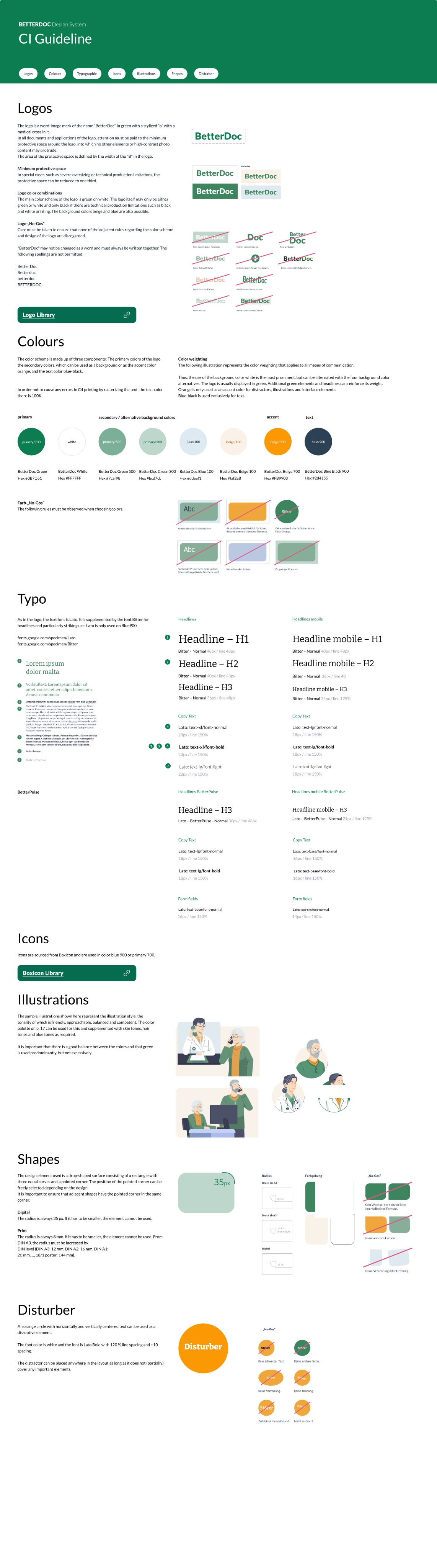
- Developed and maintained BetterDoc’s design system, ensuring consistency, scalability, and adoption across internal and external products.
How does patient journey look like?


User Journey →


Admission
Patient creates a case by providing anamnesis information and their request.

Product: New Admission Platform
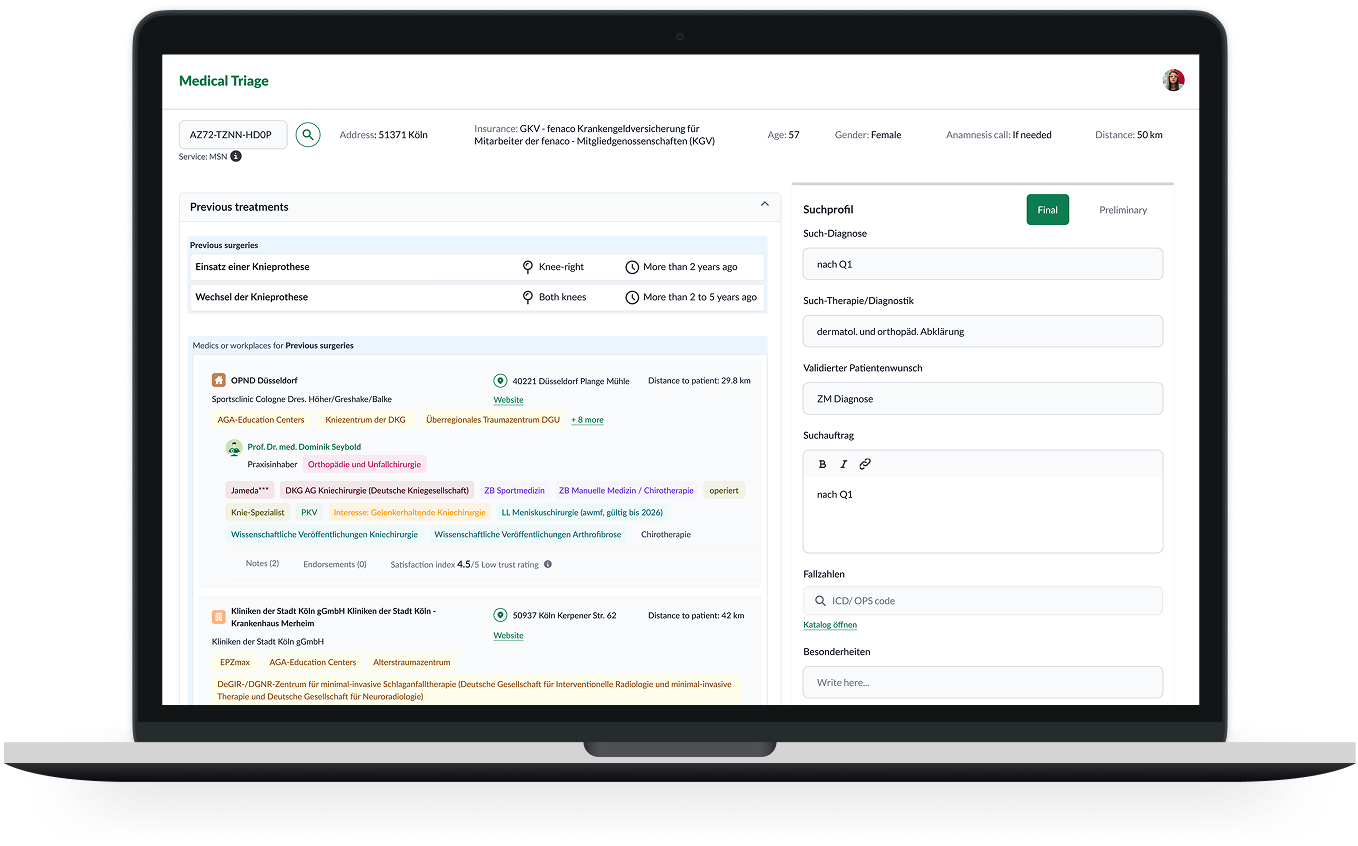
Medical Triage
Medical experts review the case and build a tailored search profile.
Product: BetterTriage
Research
Researchers filter and compare doctors and clinics to identify the best matches for the patient’s condition.
Product: Research Studio
Control Health Outcome
Support is provided to ensure the patient visits the chosen doctor and the treatment outcome is measured.
Product: BetterOutcome
Products Overview
Main products:
New Admission Platform
Problem:
No uniform system, incomplete patient info, poor UX for care team. → Patients may recieve inconsistant quality of service. Flaws are systematicallyhard to detect.
Solution:
Designed a structured admission system to capture all data, guide staff, and support lead conversion.
Team:
Cross-functional collaboration with Medical Sciences, Data, Product, Engineering and Patient Care team
Purpose:
Capture all necessary patient and anamnesis information to facilitate the Medical Triage process.
User:
Patients, medical staff, internal operational teams
Timeline:
Jan 2023 - Ongoing

See Admission
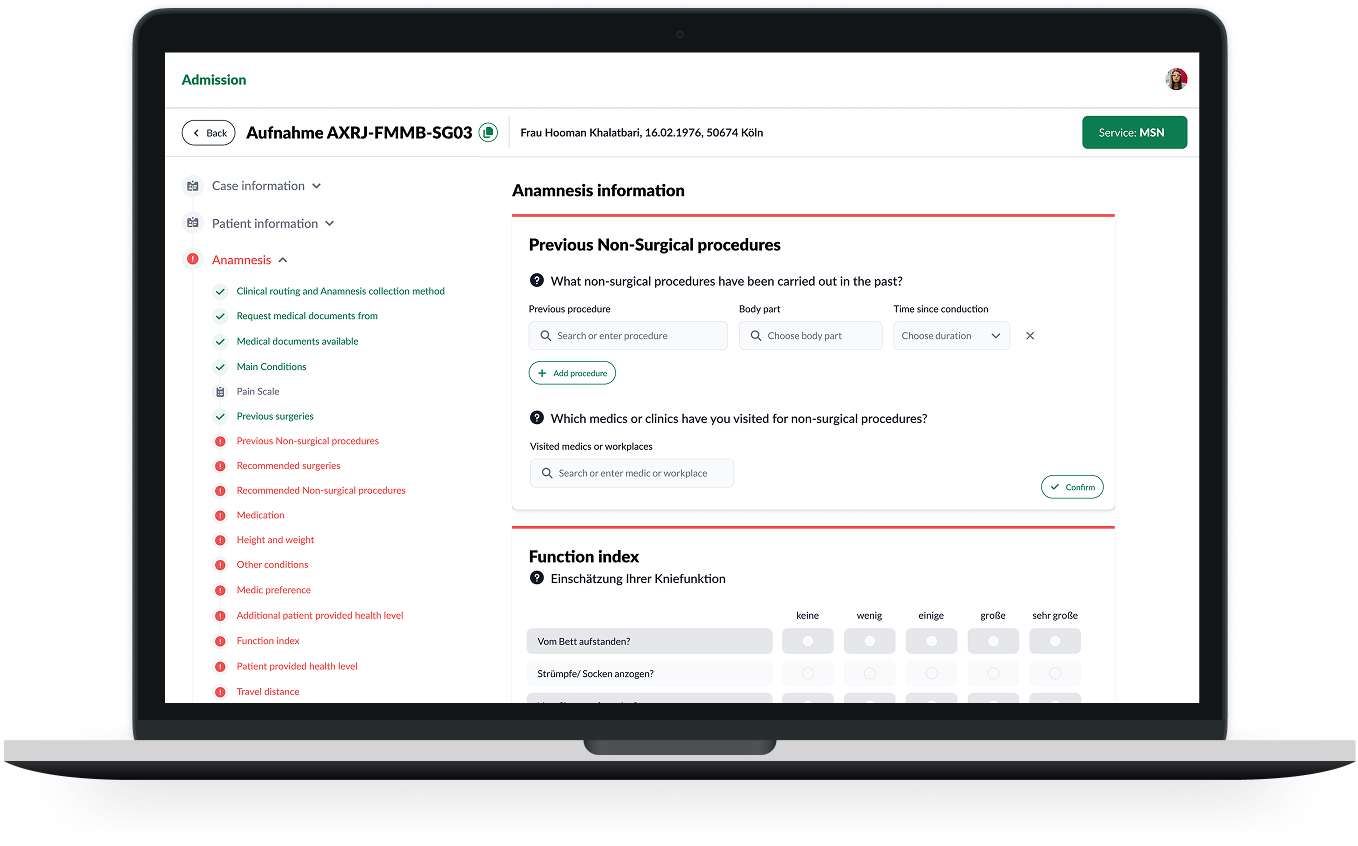
Medical Focus
Guided Workflow
Complex but Easy-to-Use Components
Capture anamnesis data
Research Studio
Problem:
Multiple disconnected tools, manual Excel comparisons, error-prone summaries.
Solution:
Designed an integrated research tool to filter, compare, and document Healthcare providers recommendations efficiently.
Team:
Cross-functional collaboration with Medical Sciences, Data, Product, Engineering and Patient Care team
Purpose:
BetterDoc's internal tool enables medical researchers to find and compare best-matched healthcare providers for patients.
User:
Medical researchers
Timeline:
Jan 2023 - Ongoing
See Research Studio
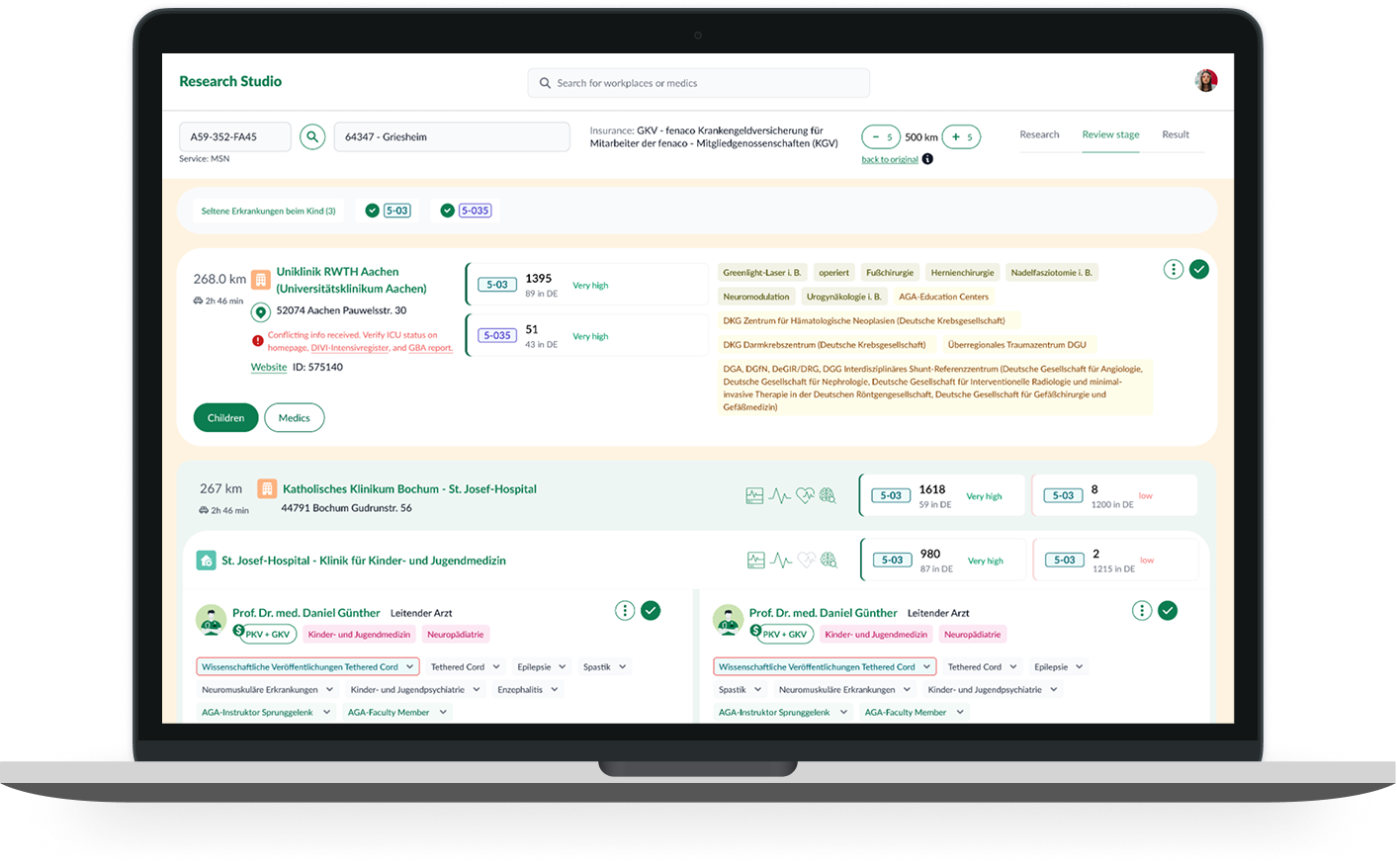
Medical Focus
Guided Workflow
Complex but Easy-to-Use Components
Capture anamnesis data
Others:
BetterTriage
Problem:
Unstructured format for search profiles; inefficient review of anamnesis.
Solution:
Designed a dedicated tool for doctors to triage cases with structured, consistent workflows.
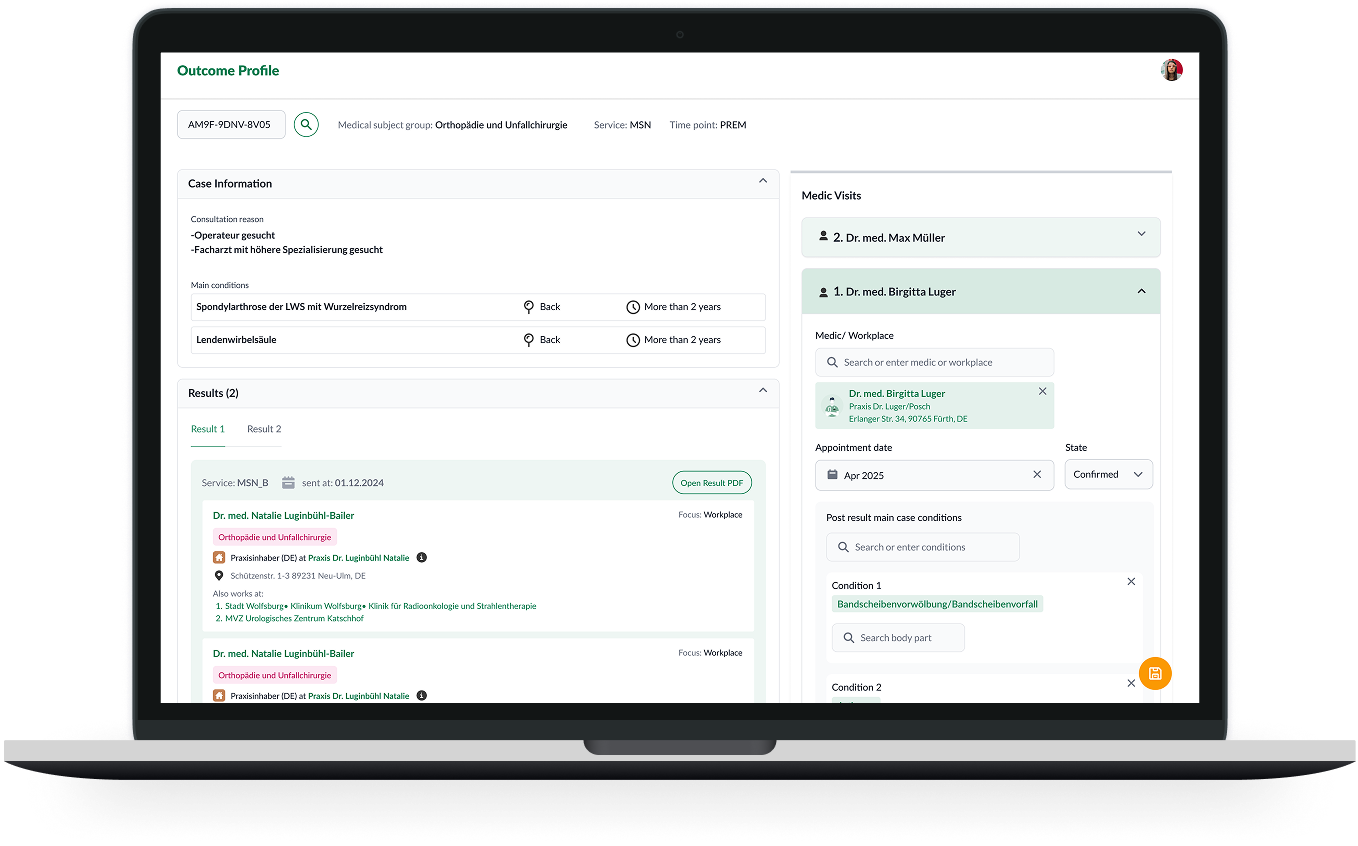
BetterOutcome
Problem:
Outcome data unstructured, inconsistent, and not aligned with medical standards.
Solution:
Designed a tool to capture and track outcomes according to PREM/PROM guidelines.
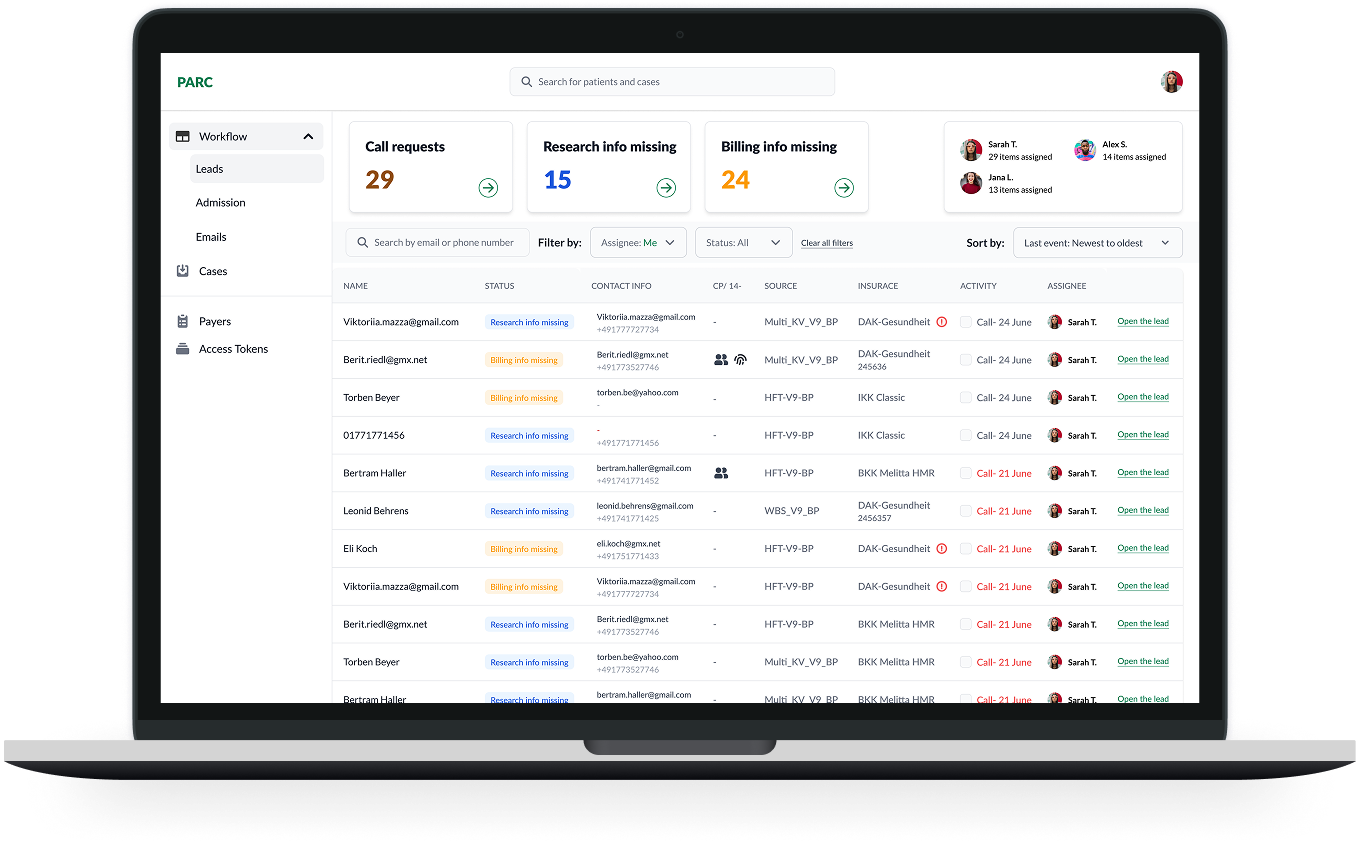
Workflow
Problem:
No custom workflow tool to enable product teams implement their workflow use cases.
Solution:
Integrated product workflows into a unified system, supporting consistent use cases across tools.
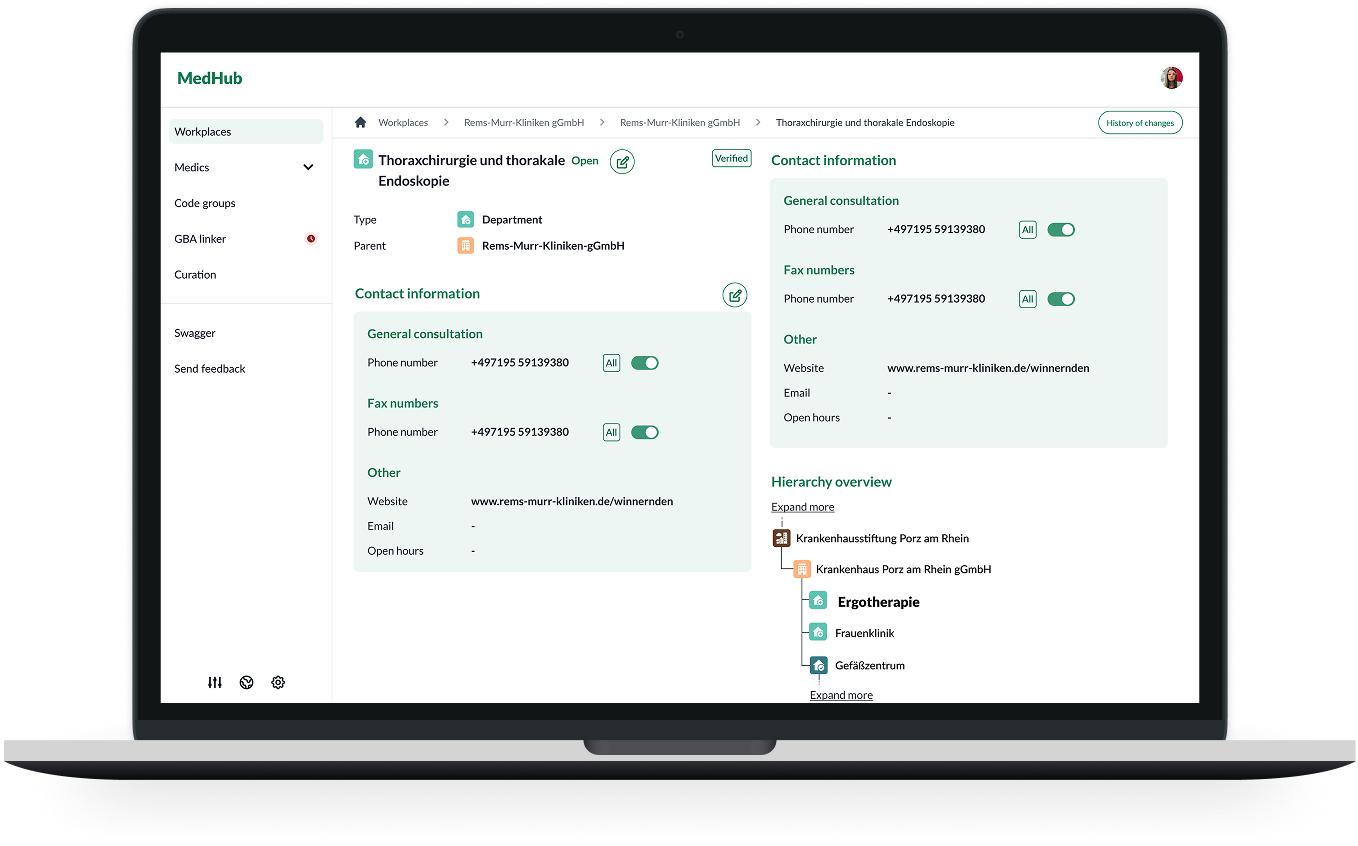
MedHub
Problem:
No visualized database for data curators to keep the data updated and comprehensive.
Solution:
Designed a central hub to curate healthcare provider data and ensure completeness over time.
Design System
Problem:
No unified style guide and design system.
Solution:
Built and evolved BetterDoc’s design system to ensure consistency across all tools. Defined typography, spacing, and interaction patterns, reducing design–dev friction and improving usability.